Comparing LLMs on the HermesAgent-20 Benchmark
I’ve been testing several high-performance models on the HermesAgent-20 benchmark suite via BenchLocal.app. This specific benchmark is designed to evaluate the “agentic” qualities of a model: its ability to follow complex multi-step instructions, maintain state, and orchestrate tool calls effectively within a simulated agent environment.
All tests were performed on my RTX PRO 6000 Blackwell (96 GB VRAM) to ensure consistent hardware performance across the board.
The Contenders
I selected a mix of dense and MoE models, all utilizing NVFP4 quantization to maximize throughput and VRAM efficiency.
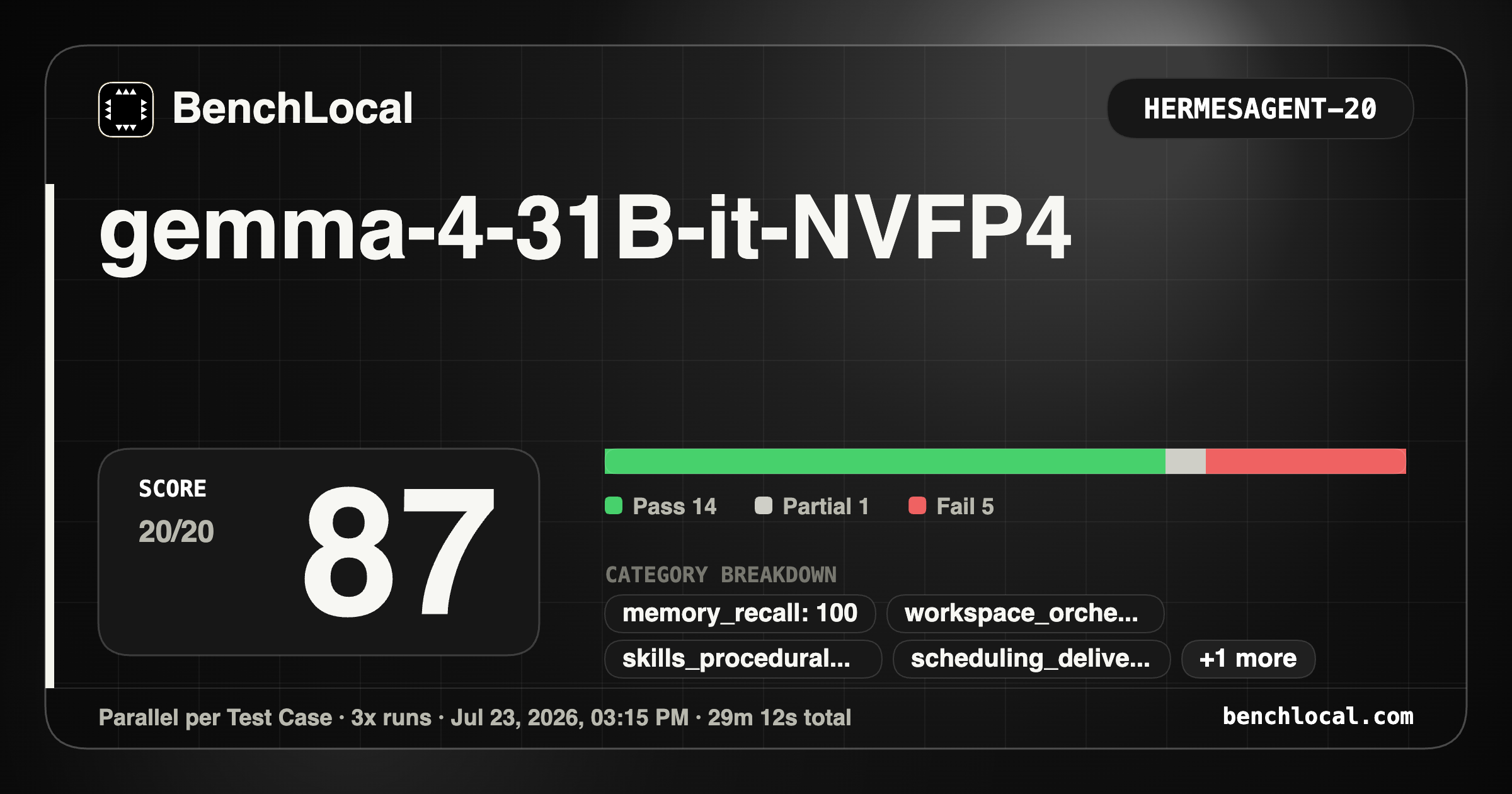
Gemma 4-31B-IT-NVFP4
Google’s latest iteration. A very balanced model that often punches above its weight in reasoning and instruction following.
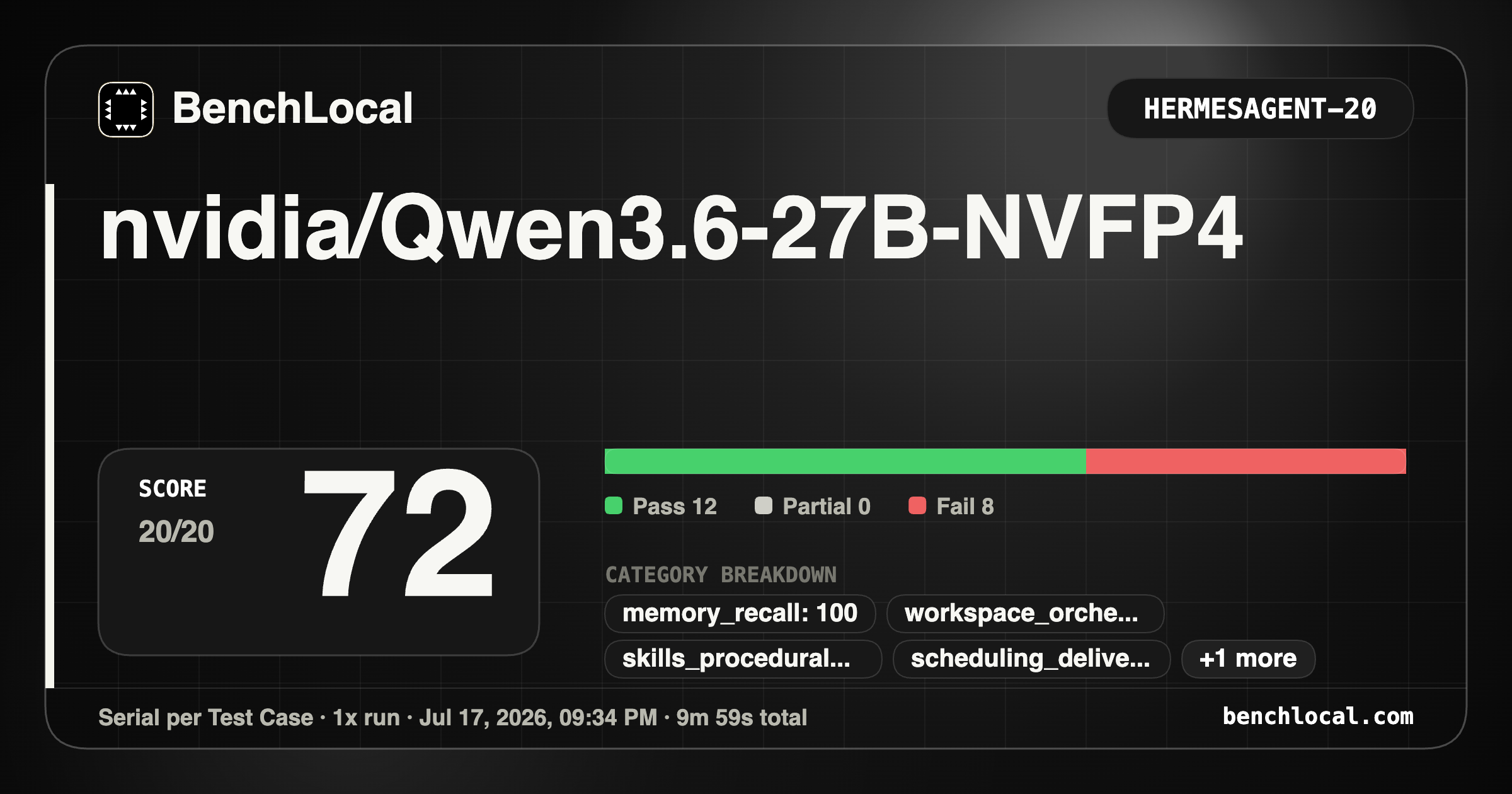
NVIDIA Qwen3.6-27B-NVFP4
The current workhorse of my local setup. Known for extreme efficiency and high reliability in coding and orchestration tasks.
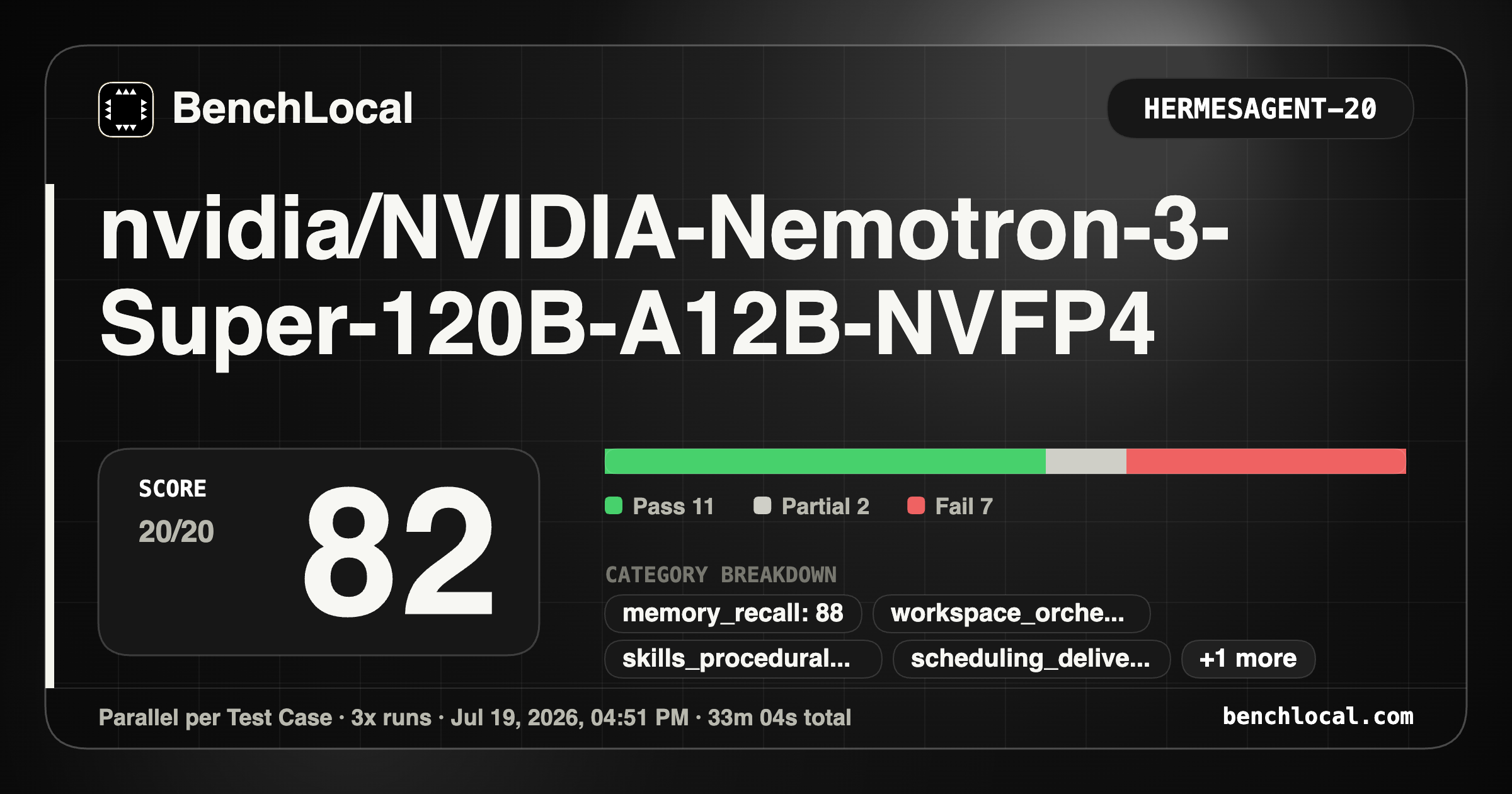
NVIDIA Nemotron-3-Super-120B-A12B-NVFP4
A heavyweight MoE model. With 120B total parameters but a smaller active set, it aims to bring “frontier” reasoning to local hardware.
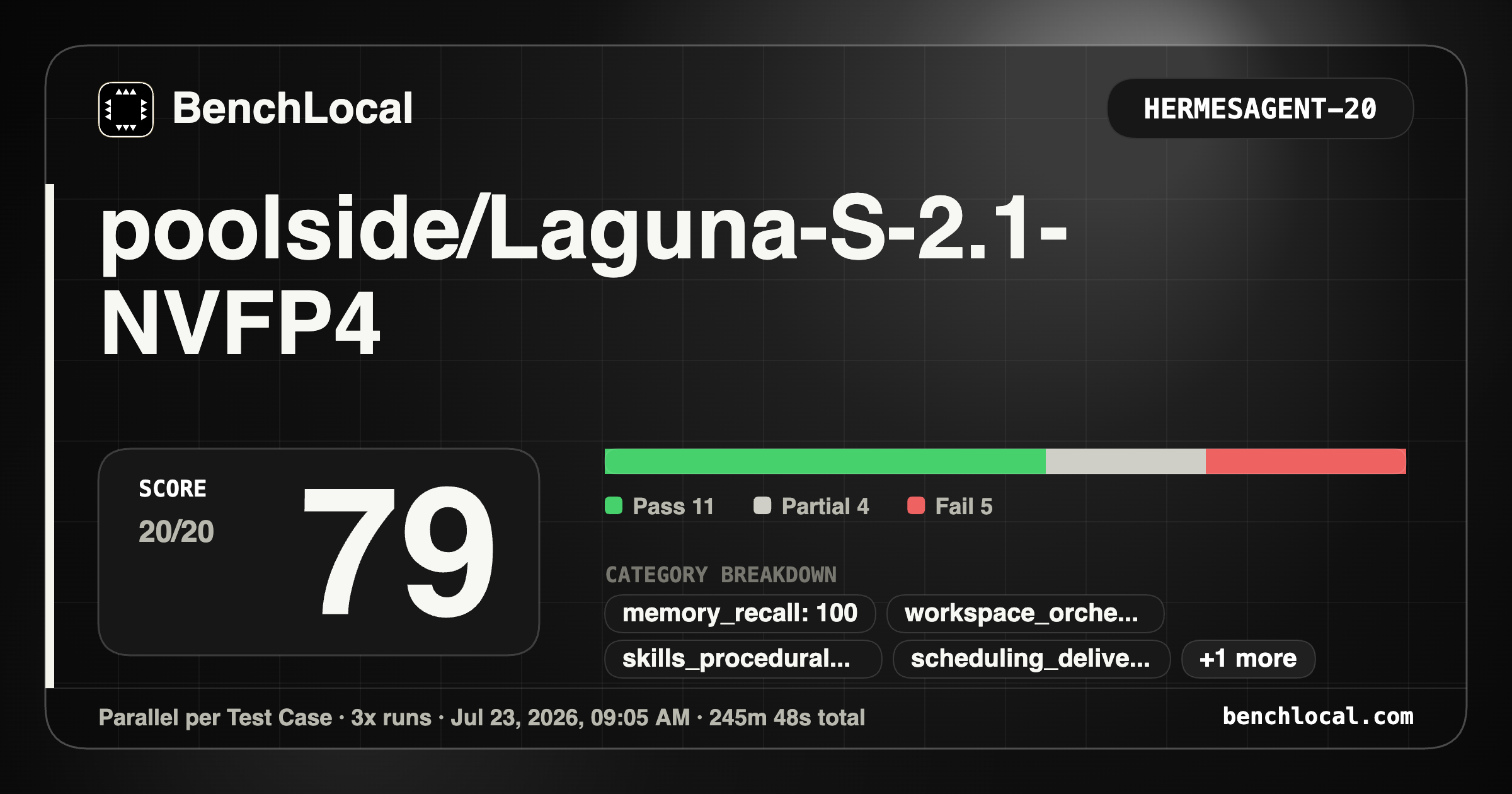
Poolside Laguna-S-2.1-NVFP4
The latest from Poolside, specifically optimized for coding agent workflows. It has shown impressive results in SWE-bench and Terminal-Bench.
Observations
The HermesAgent-20 results provide a glimpse into how these models handle the “cognitive load” of being a primary orchestrator. While raw reasoning (MMLU/GSM8K) is important, agentic benchmarks reveal the gaps in reliability—the tendency to drop a tool call or lose track of a goal over a 20-turn interaction.
For those interested in the exact scores, the screenshots above contain the full BenchLocal breakdown including Pass/Partial/Fail counts.
Links
- BenchLocal.app — The benchmark suite used for these tests.
- The Inverted Cost Model — Why I prioritize efficiency for my orchestrator.
- Maximizing the RTX PRO 6000 — Hardware and vLLM configuration for these runs.